
Lauderdale County Court Calendars Explained
Lauderdale County publishes no single live court calendar. Circuit Court, General Sessions Court, Chancery Court, and the municipal courts all split the work. Each handles its own dockets. The county case-search system helps identify a case. But its search form has no hearing-date range, courtroom, judge, attorney, or "today's settings" field. Treat it as a case finder, not a full Lauderdale County court calendar.
Each office keeps its own docket. Circuit and General Sessions settings sit with the Circuit Court Clerk. Chancery matters belong to the Clerk & Master. Juvenile and probate questions go to those court offices. Gates, Halls, Henning, and Ripley keep separate city-court records. Appeals run through Tennessee Public Case History. Federal matters use PACER and the Western District of Tennessee. Never assume a date from one system governs a case in another.
Lauderdale Court Dates Need Confirmation
Search the Lauderdale County Online Court Records System first. Use it to find an indexed Circuit or General Sessions case. That result gives you the court and the case number. It cannot prove an older date survived a continuance, a cancellation, or a later order. Ask the clerk to confirm the live setting before you rely on it.
Calendar check: Treat an online date as a lead until the responsible Lauderdale County clerk confirms the hearing date, time, room, judge or part, and appearance requirement.
A docket is the running record of filings, orders, and events. A calendar is the court's current schedule. They overlap, yet they are not the same record. When timing matters, trust the newest court notice plus a clerk confirmation.
Finding Your Lauderdale County Court Date
Begin with whichever court is named on your notice, citation, or pleading. Then work every channel that court offers. Lauderdale County has no single calendar desk serving all case types.
- Search TNCRTInfo for an indexed Circuit or General Sessions matter and note its reference, court type, case type, and any displayed event date.
- Call Circuit Court Clerk Jodie Edwards at (731) 635-0101 for Circuit or General Sessions settings, or visit the Justice Complex at 675 Highway 51 South in Ripley.
- For Chancery, call Clerk & Master Minnie Stowe at (731) 635-1941. Do not substitute the general Tuesday session rule for a case-specific time.
- For juvenile or probate, call Rachel Jackson’s office at (731) 635-3505 and ask what access is allowed.
- For a city matter, contact the city clerk. For an appeal, use Public Case History. For a federal case, use PACER and confirm through the federal clerk.
When you call, ask if the setting is active. Ask whether it is a docket call or an individual time. Find out whether you must appear in person. If the paper and the clerk give different answers, get clarification from counsel or the court right away.
Lauderdale Appellate Court Date Milestones
Tennessee's appellate system matters only after a case reaches an appellate court. The official Public Case History search tracks appellate milestones and case history for appeals. It is not a statewide search for Lauderdale County trial settings.
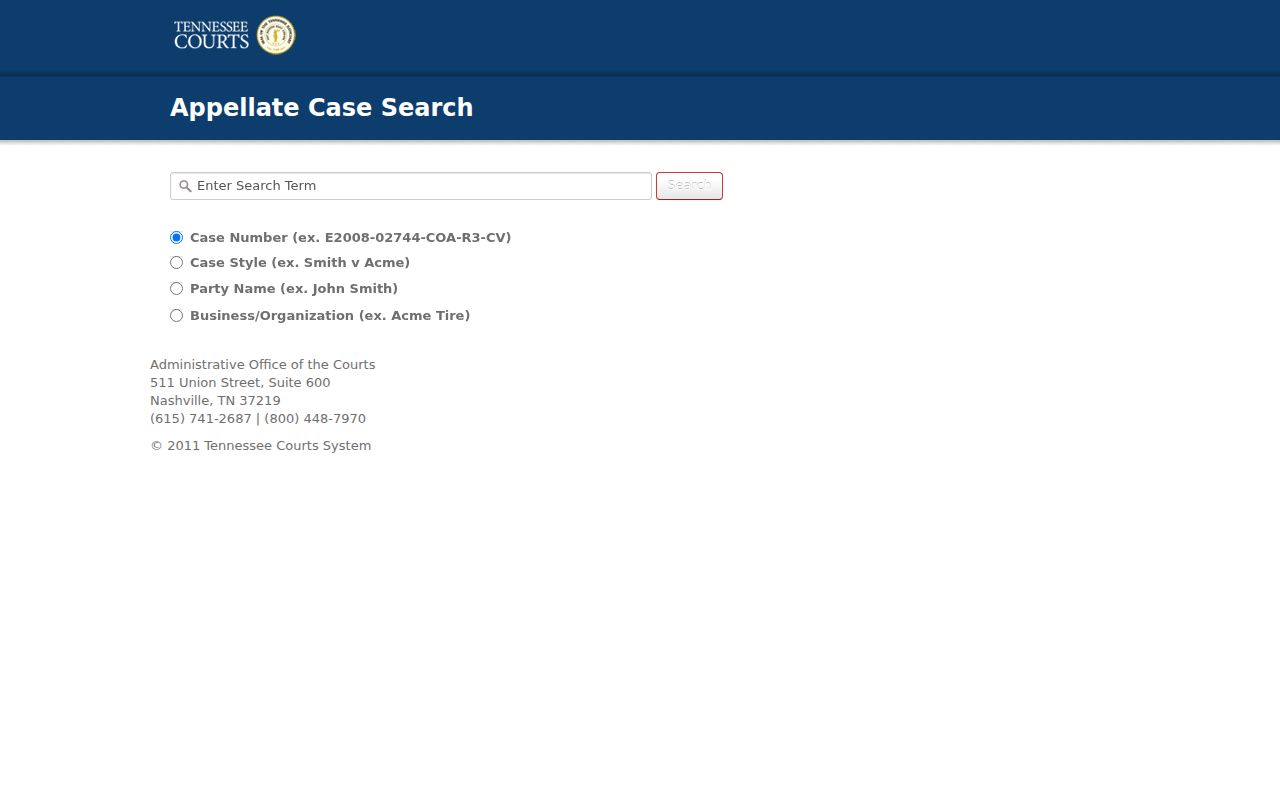
That page shows the correct statewide route for appeals. A Lauderdale County Circuit or General Sessions hearing still runs on local TNCRTInfo. It also depends on the clerk workflow.
An appellate history can list the appeal filing, record filing, briefing completion, and oral argument or submission. It may add the decision, disposition, Supreme Court activity, and closed date. Those milestones describe the appeal only. They do not update a county trial calendar or replace a local court notice.
How to Read a Court Setting
Read a setting as a cluster of linked fields. A bare date tells you little. The court name separates Circuit, General Sessions, Chancery, juvenile, probate, municipal, appellate, and federal proceedings. The division or part shows the judicial assignment. The setting type tells you what work the court expects that day.
| Date | The scheduled day, subject to a later reset, cancellation, or order. |
|---|---|
| Time | The docket-call time or individual hearing time. Ask which one applies. |
| Courtroom | The building and room for that court, not merely a courthouse address. |
| Judge | The assigned judge or part. District assignments can cross county lines. |
| Setting Type | An appearance, arraignment, motion, trial, review, compliance hearing, docket call, or disposition. |
Also note the case number, case style, reset indicator, source date, and clerk-confirmation line. Do not share private party data just to explain a calendar. A public setting can exist while the underlying file stays restricted.
Lauderdale Court Dates Versus Meetings
Lauderdale County and its towns publish civic meeting schedules. Those are not court calendars. The county's second-Monday County Court meeting is a government meeting. It is not a Circuit or General Sessions case setting. Ripley board meetings may happen in a room called the City Courtroom. That label does not turn a board agenda into a list of city cases.
Halls and Henning also post meeting notices. Details can differ between older county profiles and current town pages. Check public meetings through a city source and court cases through the city court clerk. Copying a meeting time into a court-date record can send someone to the wrong event. The same caution applies when a courthouse hosts both court and noncourt business.
Continuances, Resets, and Cancellations
A continuance moves court action to another date. A reset is simply a new setting. A cancellation removes the planned event. None of these terms means the case was dismissed, so check the latest docket entry or order and confirm what replaced the old date.
When a Lauderdale County setting moves, ask pointed questions. What is the new date and time? Which room, judge, or part now handles it? What type of setting is scheduled, and must the party appear? Ask whether a new notice was issued, and keep the office name and time of confirmation. Counsel may hold a newer scheduling order than the public index shows.
The portal's result filter does not create real-time calendar data. It only filters visible result text. Repeating the same search may not resolve a disputed or recent reset.
Lauderdale Chancery Tuesdays Are General
The 25th Judicial District's Chancery local rules set Tuesday as the standing day. That day is for Lauderdale County Chancery sessions. Treat it as a rule, not a promise. No case gets heard just because the Tuesday session exists. A motion, trial, or review still requires its own setting. That setting comes from the Clerk & Master or a written court order.
So call Minnie Stowe's office before you plan around the weekly rule. Have the case number handy, along with a party name and the type of hearing. Then ask the date, time, courtroom, judge, and how you should appear. One more caution applies here. Chancery and probate material does not appear in the public TNCRTInfo Circuit and General Sessions menus.
Lauderdale Appeal Dates Show History
Tennessee's appellate court groups its detail pages into Case Overview, Milestones, Parties, and Case History, and a sanitized official appellate case-detail example shows that structure clearly.
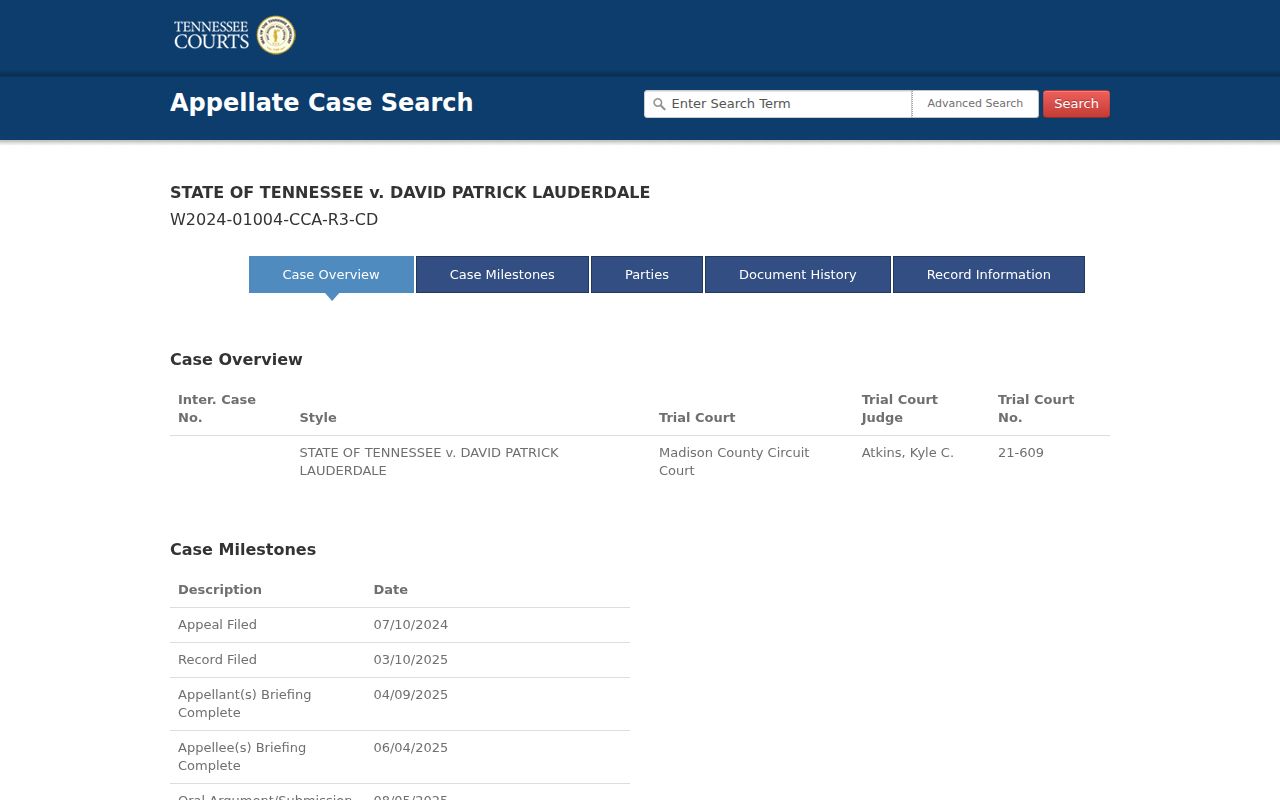
The example lays out appellate dates without exposing anyone's private case values. Those milestones are not the live Lauderdale County trial calendar. Keep the two separate.
Searching a Lauderdale-originating appeal? Enter the appellate docket number or a party name, then read the newest milestone first. Oral argument, submission, decision, and closed each mark a different event in the case history. A trial-level hearing may follow an appellate ruling. That one belongs back with the Lauderdale County clerk who handles it.
If You Miss a Court Setting
Act at once. Reach the clerk for the court you missed, and if you have a lawyer, call that office too. Ask what happened, whether the judge signed an order, and whether a new Lauderdale County court date has been set. The matter will not reset itself.
Missed a setting? A missed date can lead to a failure-to-appear response, a bench warrant, bond consequences, or other court action depending on the case.
Call the responsible clerk or counsel promptly and obtain current instructions before going to court.
Seek advice from a Tennessee-licensed attorney when a missed setting may affect rights, release terms, or the next required step.
Missed a court date in Lauderdale County? Act fast and reach the right office. For a Circuit or General Sessions setting, contact the Circuit Court Clerk first, while Chancery matters go through the Clerk & Master, juvenile and probate issues belong with those dedicated offices, and a city case is handled by the municipal clerk. Some Lauderdale County court records carry restricted access, so staff may not be able to tell you everything, but that limitation is never a reason to guess when your next hearing falls on the docket.