
Searching the Halls Court Docket
Your citation or notice comes first. Read it before anything else. If it names Halls City Court, reach Tammy Lewis through the official AOC route at 731-836-9653 or tlewis@town.halls.tn.us. When you call or write, have the citation or case number, the issuing agency, the event date, and the return date close at hand. TNCRTInfo offers a separate indexed search. It covers Lauderdale County Circuit Court and General Sessions cases, criminal or civil.
- Identify the exact court on the paper.
- Give the Halls clerk the citation or case reference.
- Ask for the violation, status, current setting, and copy process.
- Use TNCRTInfo only if the matter is filed in Circuit or General Sessions.
- Confirm the time, place, and appearance duty with the responsible clerk.
The Halls Clerk Route at North Church Street
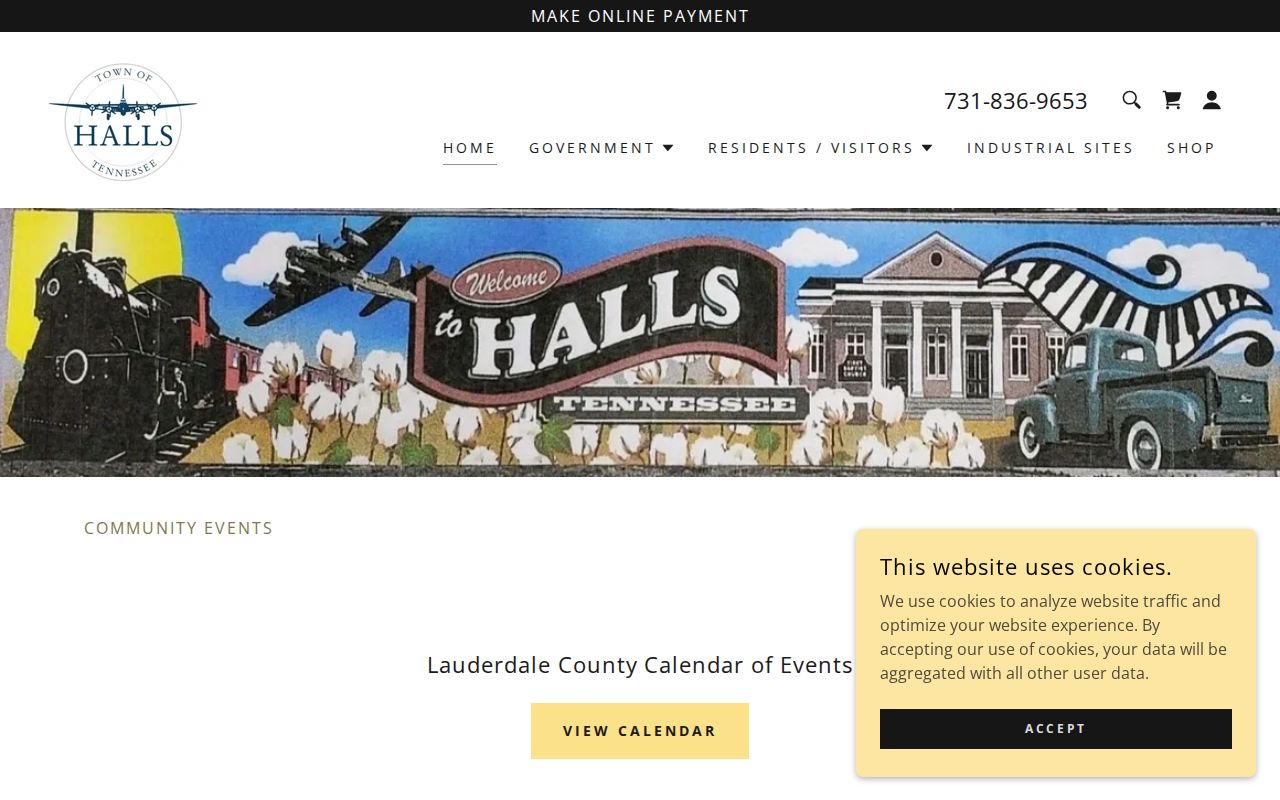
The Tennessee Administrative Office of the Courts lists Tammy Lewis as Halls City Court Clerk at 208 North Church Street, Halls, Tennessee 38040, reachable at 731-836-9653 with an official town email. The town's own site puts City Hall at the same address and lists weekday public hours of 7:30 a.m. to 4:00 p.m. One caution applies. Those hours describe City Hall access in general. Ask the clerk when the counter takes case questions. The official Halls website documents the City Hall details.
Before you visit, confirm both the clerk's identity and the counter's role. The AOC court directory and the town site may use different titles for the same general clerical staff.
Halls Municipal Court and Its Scope
Halls City Court keeps its own municipal records, separate from county systems. A city traffic or ordinance case belongs with its clerk whenever the citation names that court. A felony, a major civil filing, or a county-level General Sessions matter does not become a Halls municipal docket just because the incident happened in town. Pick the custodian by where the case was filed, not where the event occurred.
The city offers no online municipal docket search, citation lookup, court calendar, or court-copy form. Ask the clerk in person instead. Can a record be inspected, copied, or certified? Ask what identification to bring and what a copy might cost. Ripley's Form A process does not carry over. Halls has no matching form. Rely on the clerk's own instructions.
The Halls Utility Portal Is Not a Court Portal
The town site does offer online utility functions. Those services will not search a citation, show a court date, or take a court payment. That holds unless the court itself says otherwise. A generic "pay online" button can send a ticket holder down the wrong path. Follow the payment instructions printed on the citation. If they are unclear, call City Court rather than guessing.
The Halls public contact page offers a general way in. The official contact source can help you reach town staff. The AOC clerk contact stays the court-specific route.
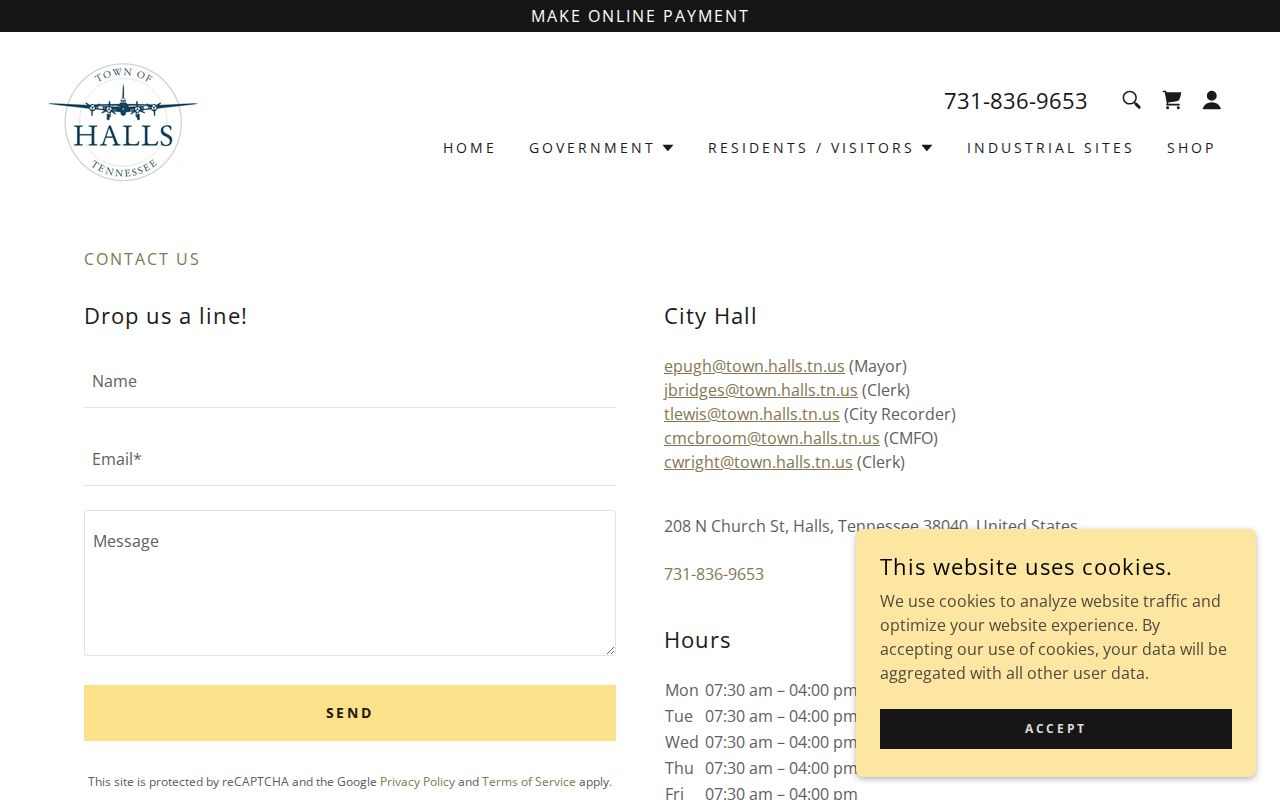
Ask staff to route your request to the City Court Clerk. Never send case facts through an unrelated payment form.
Halls Court Dates and Settings
Halls posts no public case calendar. Treat the date printed on a citation or notice as a starting point, never as proof that a reset has not happened since. The clerk can confirm the current date, time, location, judge, and setting type, plus whether you must appear. Write down when and how each detail was confirmed.
| Date | Current date after any continuance |
|---|---|
| Time | Docket-call or individual time |
| Courtroom | Location confirmed by Halls City Court |
| Judge | Presiding official for the setting |
| Setting Type | Appearance, trial, review, compliance, or disposition |
Halls Meeting Agendas Are Civic Records
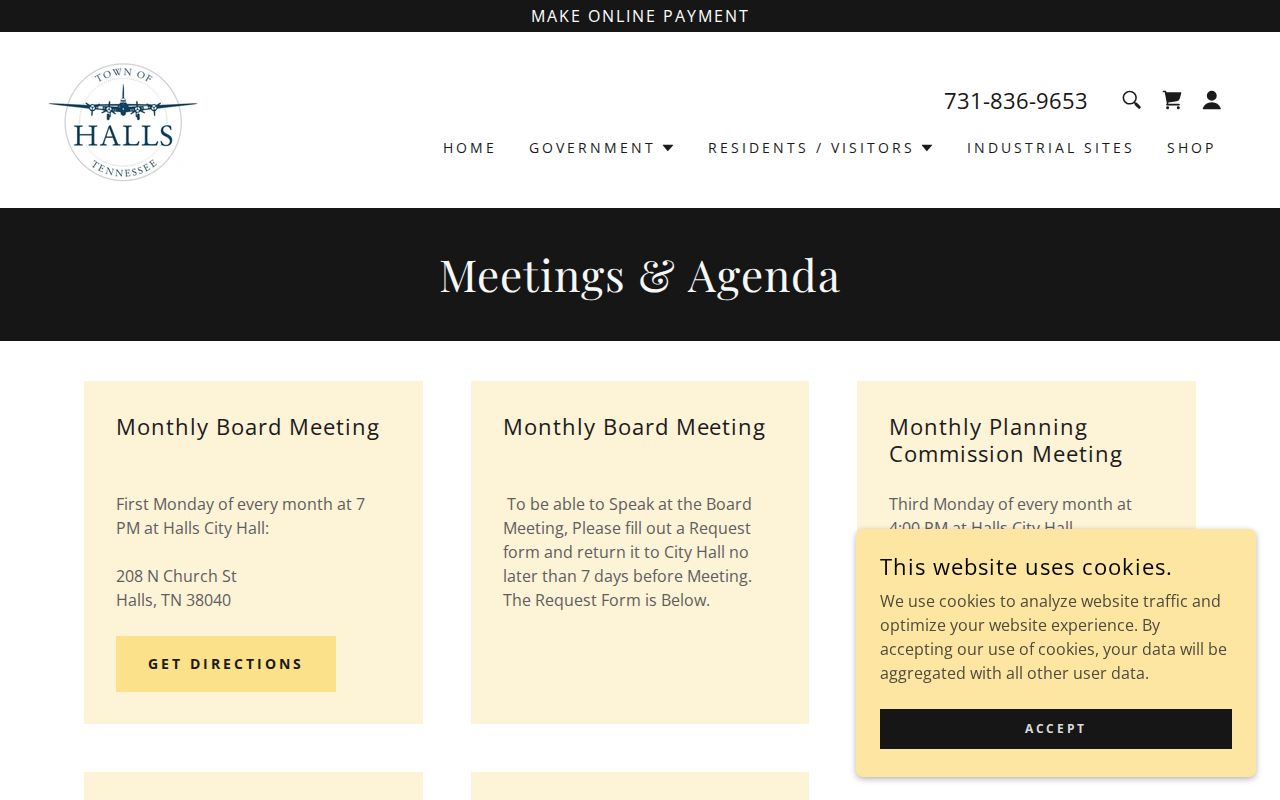
Halls publishes meeting and agenda material, including public-comment and planning documents. Those are civic records about municipal government. They are not the call of city court cases. A county profile lists a first-Monday board time. The town page may carry newer details. Neither one tells you a defendant's setting. The Halls meetings and agenda page shows the difference clearly.
A case docket is something else entirely. It records filings, settings, orders, and outcomes in one proceeding, and the court clerk supplies it on request.
Halls Traffic Tickets
Route any Halls citation by the court named on its face. If that court is Halls City Court, call the municipal clerk. Give the citation number, issuing agency, citation date, and appearance or payment deadline. TNCRTInfo has no Traffic case type. It also has no citation-number search. An empty result there does not mean the city ticket lacks a record.
Ask the clerk how to pay and how to contest. Ask whether appearance is mandatory. Ask too how to request a disposition. The court sets any fees; municipal fee schedules are not published online. Traffic school or deferred treatment depends on the court's answer, not an assumption. For the county-level split between court files and state driver information, see Lauderdale County traffic tickets.
Halls Is Second in the Four-Town Count
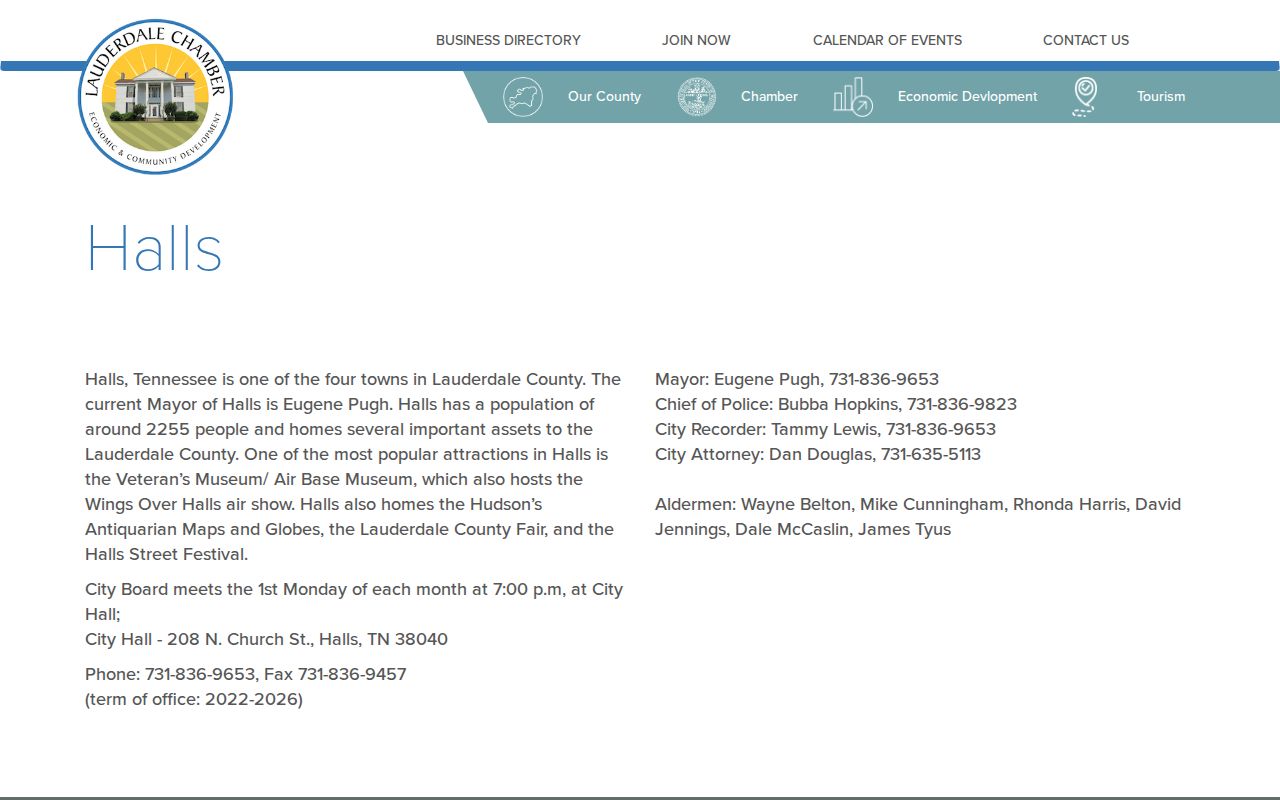
The official 2020 Census table of incorporated places counts 2,091 people in Halls. That ranks second among Lauderdale County's four incorporated towns. A county site's approximation of about 2,255 comes from a different kind of source. Neither number says anything about court caseload or where a record sits. The county Halls profile supplies the place context. It runs from Halls' railroad-stop history to the Veterans' Museum at the Dyersburg Army Air Base.
That civic identity sits beside the docket instructions; the case facts stay with the court record.
Where Halls Cases End Up
Halls keeps its own municipal files. The city clerk holds them, so a traffic ticket or city citation starts there. Lauderdale County work travels a different route. Indexed Circuit and General Sessions cases, criminal or civil, run through TNCRTInfo and the Lauderdale Circuit Court Clerk.
Chancery and probate-related matters sit with the Clerk and Master. Juvenile access is restricted. Appellate dockets live on Tennessee Public Case History.
Docket flow: Halls Municipal Court › Lauderdale County Courts › Circuit Court
These tiers describe where a case could land, not a path every case follows. Start with the court of filing. The Lauderdale County court docket walks through the county search in more depth.
When the Halls Case Is Not in TNCRTInfo
TNCRTInfo covers Circuit Court or General Sessions, split into Criminal or Civil. Halls City Court is not on it. So a missing name has many possible causes. The year may be wrong. The number may be entered in the wrong format, or the file may be older paper. The matter may be restricted or sealed. Or the data was never provided to the portal.
Go back to Tammy Lewis for a Halls municipal citation. On a county file, try the four-digit filing year plus the numeric segment after the final hyphen. If it still will not surface, ask the proper clerk about the record's true home. That clerk can say whether the case belongs in Chancery, probate, juvenile, municipal, appellate, or federal records. One warning matters most: a no-result screen never proves that no proceeding exists.
How Halls Docket Terms Fit Together
Think of the docket as the case's running chronology. A filing, charge or violation, hearing, reset, order, and disposition may all appear in it. Entries run shorter than the documents behind them. An online or clerk-supplied index may say “disposed.” Ask for the order if the exact result matters. It may say “continued” or “reset.” Confirm the new date rather than trusting the earlier setting. And remember that a charge is an allegation, never something to report as a conviction.
The county portal's fields have their own logic. Court Type means Circuit Court or General Sessions; Case Type means Criminal or Civil. The portal calls their combination a Court Office. Case Year is normally the original four-digit filing year. The Case Number field takes the numeric segment after the final hyphen. Those mechanics apply to county docket search, not a Halls municipal one.
A municipal clerk may find a Halls record by citation number, name, date, or issuing agency. The city posts no online interface or local number format. Give the clerk every neutral identifier you have. Then ask staff to read back the court name and setting. Request only a record that already exists. Demanding that staff build a fresh list of cases is not the same thing. That is not asking to inspect or copy a docket the court already keeps.
Halls began as a railroad stop in the nineteenth century. Its civic pages point to spots like Critchfield Park, the public library, and the Veterans' Museum. None of that shifts jurisdiction. The filed court and its record keeper still control every case lookup.
Preparing a Halls Clerk Call
Keep three questions separate on a clerk call. Can you locate the case? What does the current docket say? How do I get the underlying order or disposition? A quick status answer may settle a date question without producing a certified record. If the citation is not found, recheck the issuing agency and court name before jumping to a broad county name search. Repeat the setting details back, note the date of confirmation, and ask whether a later call is needed before you appear.
When you request a copy, name the exact existing item, whether the docket, final order, or disposition. Say whether you want inspection, a plain copy, or certification. Ask about delivery and a fee estimate. Halls publishes no official schedule or court request form, so do not assume another town's workflow applies.
Public Access to Halls Court Records
Ask for an existing Halls docket, order, or disposition. Say which form you want: inspection, plain copy, or certified copy. Fees come up, so ask about them and about delivery. Halls posts no municipal fee schedule. Access still answers to statutes, any sealing or protective order, and redaction. Juvenile files and protected personal identifiers stay closed no matter how general the request is.
Key Rules:
Tennessee Supreme Court Rule 34 recognizes public court-record access subject to legal exceptions.
Tennessee Public Records Act, Title 10, Chapter 7, Part 5 concerns existing open governmental records.
Tennessee Code § 37-1-153 restricts juvenile-record access.